
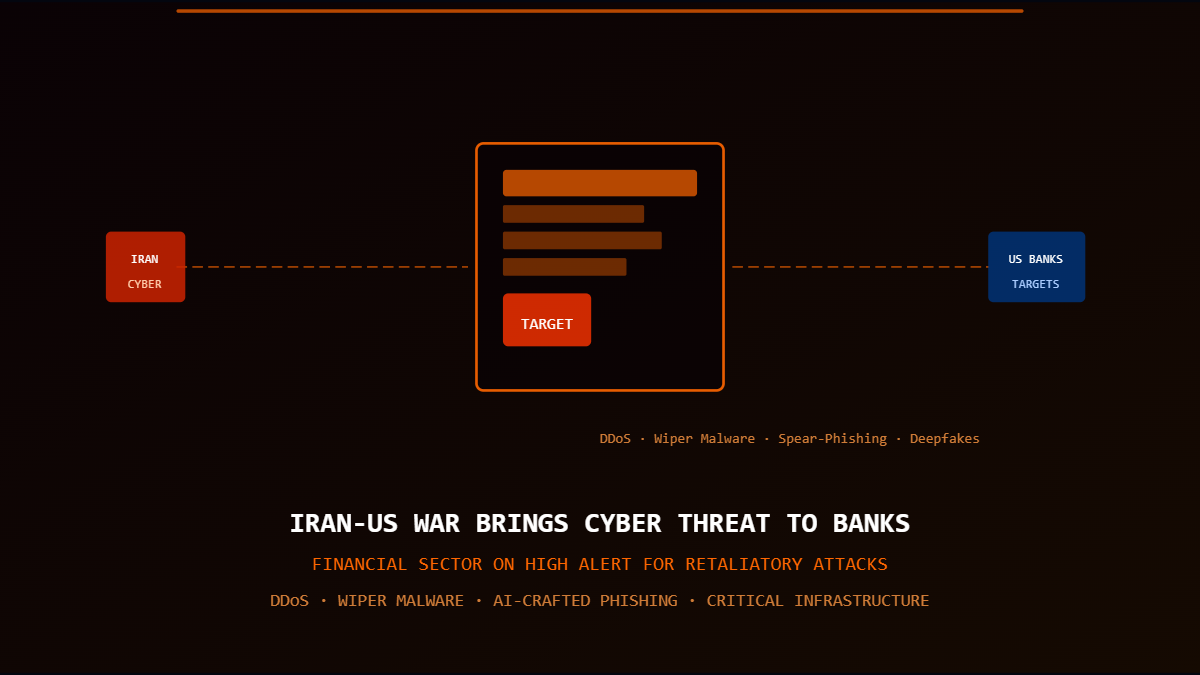
When the U.S. and Israel launched coordinated strikes against Iran on February 28, 2026, the conflict did not stay contained to the physical battlefield. Within hours, Iran had stood up a dedicated “Electronic Operations Room” to coordinate retaliatory digital offensives — and U.S. financial institutions were placed squarely in the crosshairs.
A Threat With Historical Precedent
This is not the first time Iran has targeted American banks in cyberspace. Between 2011 and 2013, a state-sponsored Iranian hacking campaign known as “Operation Ababil” overwhelmed servers at nearly 50 U.S. financial institutions with up to 140 gigabits of junk data per second, disabling online banking services for hundreds of thousands of customers and costing tens of millions of dollars in remediation. A 2016 U.S. Department of Justice indictment charged seven Iranian nationals for their role in those attacks.
Following the February 28 strikes, the Financial Services Information Sharing and Analysis Center (FS-ISAC) reported a significant spike in distributed denial-of-service (DDoS) attacks disproportionately targeting the global financial sector. Multiple cybersecurity firms — including Sophos X-Ops, Unit 42, and SISA — issued elevated threat assessments within days of the initial military action.
The Modern Threat Toolkit
Today’s Iranian cyber operations are significantly more sophisticated than those of a decade ago. Banks should expect multiple concurrent threat vectors: DDoS attacks to disrupt operations, credential-driven intrusions targeting employee accounts, destructive wiper malware designed to erase data and cripple systems, and AI-powered spear-phishing campaigns using deepfake content to manipulate employees and customers alike. Iranian state-sponsored groups are also known to target IT providers, supply chains, and cloud infrastructure to gain access through third-party vendors — a particularly dangerous vector given how interconnected modern financial services are.
What Financial Institutions Should Do Now
The Department of Homeland Security has not yet issued a formal alert, but private-sector intelligence is clear: the threat is elevated and immediate. Financial institutions should immediately review and test their incident response playbooks, ensure detection thresholds and escalation channels are functioning, prepare communications plans for the possibility of public-facing disruptions, and implement out-of-band verification protocols to guard against AI-driven social engineering. This is not the time for complacency — the cyber frontline is here, and it runs directly through the financial sector.